Sunday, May 27, 2012

Citizen Journalism Fails Viewers at the BBC

Fact-checking took a holiday at the BBC today, as a credit line of "photo from activist" was used to identify propaganda promoting the activist's cause, on the front page of the BBC's website for an article titled "Syria massacre in Houla condemned as outrage grows." The problem? Among the many, is that this photograph, purported to have been taken on or about Friday, May 25th, 2012 in Houla, Syria, and represented in the photo caption as "believed to show the bodies of children...", was actually taken on May 27, 2003, 9 years earlier, in Al Musayyib, Iraq, by photographer Marco Di Lauro, a photojournalist for Reportage by Getty Images.

The front page of the website, below, shows the image in it's mis-credited and mis-represented form:
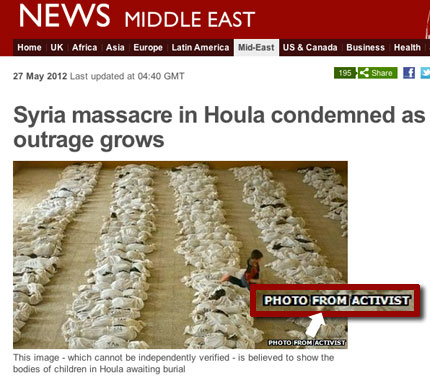
The image here shows the image on Di Lauro's website, with the proper caption:
"An Iraqi child jumps over a line of hundreds of bodies, in a school where they have been transported from a mass grave, to be identified. They were discovered in the desert in the outskirts of Al Musayyib, 40 km south of Baghdad. It has been estimated that between 10,000 and 15,000 Iraqis had been reported missing in the region south of Baghdad. People have been searching for days for identity cards or other clues among the skeletons to try to find the remains of brothers, fathers, mothers, sisters and even children who disappeared when Saddam's government crushed a Shi'ite uprising following the 1991 Gulf War."
Di Lauro, who is a freelance photographer represented by Reportage by Getty Images, also licenses this image on the Getty website here.

As noted above, there are many problems - here are a few of them:
(Continued after the Jump)

Problem? Taking an Activist's image

It should not be the case that someone whom is identified as an "activist" should be given the credence of a journalist, and have their propaganda disseminated under that banner. A statement they make is (and must be) fact-checked, as should any visuals they provide. BBC Director of the World Service and Global News, Richard Sambrook, who wrote in Nieman Reports, from The Nieman Foundation for Journalism at Harvard, of "Citizen Journalism and the BBC" during his tenure at the BBC, wrote at the time (Winter, 2005) "...From now on, news coverage is a partnership." Sambrook notes, accurately, "How can our journalistic reputation be protected when we are not fully in control of our content?" Indeed, Mr. Sambrook. This "partnership" was violated by an activist with their own agenda.

Problem? Citizen Journalists
It must be said that Sambrook is not now at the helm of any BBC division, but he was a reporter for the BBC and left in 2010. Surely, Sambrook's imprint was left on those who came after his departure. Sambrook defends citizen journalists, with initiatives like the BBC Action Network's iCan, saying "As someone who supports this new direction, I don’t suggest the BBC staff abdicate their responsibility for accuracy, fairness or objectivity. There will always be a central place for editorial judgment to be applied. That judgment is the essential brand value of major news organizations. As we open up to contributions from the public, we must do so in a way that is consistent with our editorial values." At that same time, Sambrook authored another article for Nieman Reports, touting "The BBC’s College of Journalism" writing "The BBC is establishing a College of Journalism to raise and support editorial standards...the Bollege of Journalism will also focus on ethics and values and building knowledge on key themes and issues, such as Europe and the Middle East...So far, 10,000 staffers have completed an online editorial policy course (the biggest BBC interactive training initiative yet), and 8,000 staff members have attended workshops on sources and attribution." It is clear that whomever edited the article must have missed that workshop on sources an attribution.

In that same issue of Nieman Reports, Santiago Lyon, at the time (and still) Director of Photography for the Associated Press and Lou Ferrara, who was an online editor for the Associated Press, wrote in an article "With Citizens’ Visual News Coverage Standards Don’t Change" that "‘In an era in which digital alteration of images is increasingly easy, credibility is everything.’" In fact, as they note of an image they saw on a BBC website, they (the AP) went through the process of locating the citizen photographer, obtained rights, and then distributed the image. Lyon's team, no doubt, also vetted the veracity of the image during that process. Of the veracity of all citizen journalism content "The same journalistic standards that are currently applied to mainstream media sources will need to be applied to all citizen-produced material. Verification is crucial."

Problem? Stealing from someone
This activist saw it fit to steal from a photographer. Di Lauro puts his life on the line to make a living and produce images that reveal to the world what is happening. He should be afforded the ability to continue to do so, and copyright, and rights to his images, gives him the ability to continue to tell the story.

Problem? No fact-checking. 

The caption attempts to offer an out, indicating "This image - which cannot be independently verified - is believed to show the bodies of children in Houla awaiting burial." According to the BBC, and other news sources, while there were at least 90 people killed, 32 were children under the age of 10. In 30 seconds, I was able to count about to 25 bodies in the row second from the left, and multiply that by 3 for the 3 center rows of the 5 depicted, and that's 75 estimating that there are also 25 on the two outer rows depicted and we're at 125. Clearly, there are way more than 32 bodies in this photograph, and there are even more than 90.

Clearly, more questions needed to be asked of the source.

Problem? No correction listed
An update of the story just before 8am GMT, did not list a correction, or editorial note about the mis-credited and mis-characterized photograph. The BBC simply made it as if it didn't exist and never did anything wrong. Di Lauro, and Getty Images have recourse for the theft of his intellectual property. While they of course have recourse with the activist, they also have recourse with the BBC as well.

Problem? Di Lauro had recourse - but his recourse would be much less, or non-existent, if Orphan Works had existed
There have been many conversations about the "orphaning" of photographs, whereby someone strips the metadata and and other indications of image ownership from an image, and then uses that image for their own purposes and ends, and when the actual creator of the photograph is identified, they are unable to stop the uses of their image - whether in an accurate depiction of something, or, in this case, as propaganda completely disconnected from the reality in the image. While it is reasonable to assume that a news organization, presented with the evidence of falsehood, would remove a mis-representing image, commercial entities, or uses where the users don't care or are otherwise unsavory, may well keep the image up, under the misguided notion that the end justifies the means. While the efforts to make orphaned works legally allowable in the United States (a dubious at best consideration relative to signatories to the Berne Convention, which would likely apply in this UK use) went away a few years back, the effort continues to percolate with people who believe much of intellectual property should not be given any control by it's creators. I would hope that even those orphan works proponents would agree that the theft of intellectual property in this manner should not be allowed in whatever final form they hope for in their legislative efforts.

In the end, it was because Di Lauro became aware of the theft of his image and the mis-characterization of it that the BBC no longer has it on their website. It was not because of the efforts of the editors of the BBC doing their due diligence. According to the screen grab the story was updated at 04:40 GMT, and the screen grab we have is timed at 12:26 GMT, so for at least 9 hours the BBC was profiting off of Di Lauro's image, and that is assuming that the photo was first posted during the 4:40am update, and taken down right after the screen shot was made. A screen shot a few hours later shows a video instead. How many other times has this happened? Whether it's a CNN iReporter, Fox News' uReport, being an MSNBC Citizen Journalist, or a part of the BBC's Action Network's iCan, Citizen Journalist representations must carry at least as high a burden of proof as that of professional journalists, if not higher. Interestingly enough, The BBC closed up their iCan experiment because, according to BBC News editor Peter Horrocks in this article "the level of involvement in it compared to the cost was inappropriate." As such, in April of 2008, just 5 years in, the grassroots effort wasn't working. While the iCan effort isn't exactly comparative to iReporters or uReporters, the notion of laying the responsibility on the public at large for engaging in reporting is fraught with pitfalls and risks. The BBC took a risk while their standards were on holiday, and that risky move failed them miserably.


Please post your comments by clicking the link below. If you've got questions, please pose them in our Photo Business Forum Flickr Group Discussion Threads.


Tuesday, May 22, 2012

Getty Images Returning to the Stock Market with an IPO?

According to the NASDAQ website (here) the Financial Times is reporting that Goldman Sachs has been retained to consider an IPO and other options. Photo Business News reported that federal regulators had approved Hellman & Friedman taking Getty private (Getty Images - Moving Forward, 3/19/08) at a rate of $2.1B (according to Forbes) and $2.4B according to the Nasdaq site. They are considering a valuation for the IPO of $4B. Getty at one point saw highs of $90+ a share in their heyday, before plummeting and then going private. With the Shutterstock IPO revealing their average stock sale of $2.05 per image in an SEC filing (as reported by Photo District News, here), how can Getty see a $4B valuation? Dubious, at best.
(Comments, if any, after the Jump)

Please post your comments by clicking the link below. If you've got questions, please pose them in our Photo Business Forum Flickr Group Discussion Threads.
Monday, May 14, 2012

USA Today ≠ US Presswire at US Olympic Media Summit (And Beyond)

When you think "olympic" the concept of "top of their game", or "monumental" comes to mind. While "Olympic" refers generally (and usually) to the Olympic Games, it is often used as a verb (no doubt much to the chagrin of Olympic Officials) to characterize the best. This year, when the Olympics arrives in London, it seems that USA Today is sending in the farm team rather than the best, when it comes to their photography staff, for the most part.

USA Today staff photographers with decades of experience covering sports were told last week that, well, their services wouldn't be needed in London. USA Today Sports Media Group Company, which now owns the US Presswire photo wire service, known to some as the "let's all work for photo credit, press-file hot dogs, and a few stock sales" photography operation, decided that they would choose the team going to cover the olympics this year, save for just one well regarded USA Today photographer. If there was any doubt that the staff will be wet behind the ears, you need look no further than the list of those credentialed - Richard Mackson's teenage kid seems to be credentialed as a part of the team of pros going over and she either just (or will soon) graduate from...wait for it... high school.

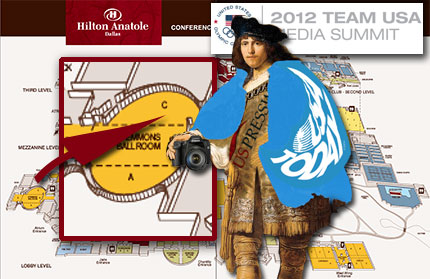
If you're looking to talk to the USA Today photo booth out at the Olympic Media Summit at the Hilton Anatole, going on today and tomorrow, they won't be there. Well, the booth is there - in Stemmons Ballroom C (on the right as you walk in), but it's not actually staffed by USA Today staffers - instead, it's staffed by US Presswire staff and contractors. So if you see someone wearing a USA Today credential, shirt, or beneath one of their banners, it's really a US Presswire person cloaked in the storied name of USA Today.

For decades, the USA Today photo staff has put forth the best of the best to cover the Olympics. So too has Sports Illustrated, and other storied organizations that see covering the Olympics as the pinnacle of sports photography. I am sure that Getty Images will be quite interested to know that US Presswire is parading around under the cloak of USA Today, seeing as the US Olympic Committee encourages people (here) to contact Getty for rights-manged images, noting "In addition, Getty Images has a vast archive of U.S. Olympic-related images." In fact, according to the Getty website here, they say "...As the official photographic agency of the International Olympic Committee since 1988, we have the imagery you need to set your Olympics coverage apart." While I am sure that USA Today has shared content with their sister organization (Gannett) newspapers in the past, it doesn't take much to consider that Getty's revenues will be affected by US Presswire syndicating their content from the Olympics outside of USA Today and Gannett. Then again, maybe not. Maybe Getty is right - their coverage may well be "...set...apart.." and not even in the same league as USPWs. In this case, Getty is the big leagues, and, yes, coming full circle, the USA Today team, filled with USPW photographers, seems to be the farm team.

I'm guessing that the new President and Publisher of USA Today, who will be reporting to Gannett (NYSE: GCI), Larry Kramer, (announced just today, here) will be wondering why a teenager is on the credentials list along with so many other US Presswire photographers when his thoroughbred sports photographers didn't make the cut. According to the USA Today article, he's in charge of the USA Today Sports Media Group, so this issue falls right under his responsibilities list.

(Comments, if any, after the Jump)

Please post your comments by clicking the link below. If you've got questions, please pose them in our Photo Business Forum Flickr Group Discussion Threads.
Thursday, May 10, 2012

Copyright Small Claims Court - The Discourse of Benefits & Challenges

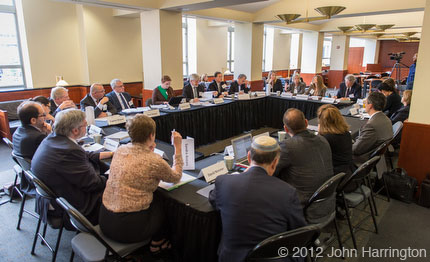
The US Copyright Office held a roundtable discussion today in Washington DC, at the George Washington University Law School on the subject of how (and if) to propose implementing a form of a Small Claims Court for copyright infringement claims. The roundtable was filled with rights-holders from around the country who came to share their views on the benefits and challenges that a Small Claims Court venue would have on rights-holders. In his opening remarks, David Kappos, the Under Secretary of Commerce for Intellectual Property and Director of the United States Patent and Trademark Office, said that the issue of an Intellectual Property "Small Claims" system is a "burning platform," that must be addressed.
(Continued after the Jump)


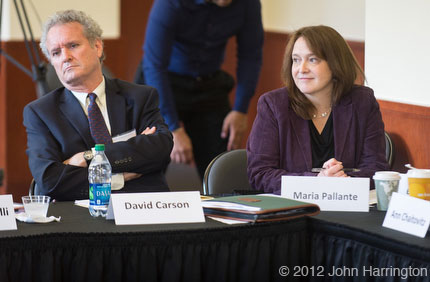
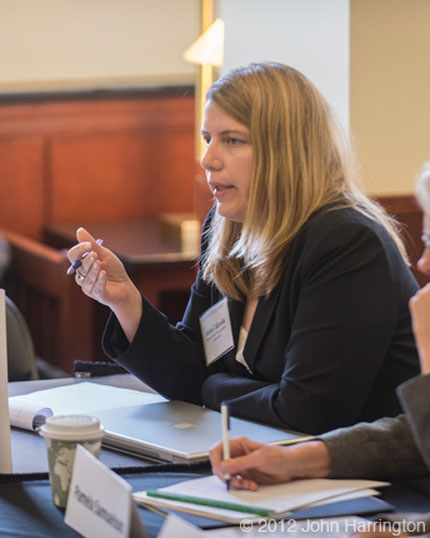
The Registrar of Copyrights, Maria Pallante (below right) listened intently throughout the discussions, as did David Carson (below left), counsel to the Copyright Office. Pallante is looking to increase the number of deposits, and to evolve the online registration system in a way that works for copyright owners, as well as make protecting copyrights easier for copyright holders.

The National Press Photographer's Association Advocacy Chair, Alicia Wagner Calzada, a highly regarded photographer, and also an attorney for the NPPA, make a number of points - among them the challenge that if the issue of fair use could 'eject' a claim from the Small Claims Court, that, for many photojournalists (and members of the NPPA) whose work is of a highly newsworthy nature, this is a common defense of infringements that NPPA members face, and would be problematic.

Calzada (above) said of the meeting "One thing appears clear--this is not a simple fix. The event was very productive in terms of shining a light on the challenges to crafting a small claims solution for copyright infringement. It is clear that there are genuine obstacles, including some constitutional issues. What I took away from the discussion is that the challenges are not insurmountable. It is, however, important to create a system that will uphold constitutional scrutiny or it will be a wasted effort."

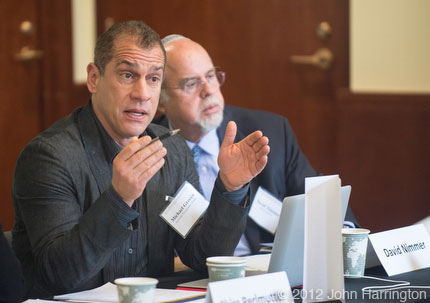
Also on hand was counsel for the American Society of Media Photographers (below right rear), Victor Perlman, and Executive Director Eugene Mopsik (below center). The ASMP has maintained an ongoing relationship with the Copyright Office and Congress in many issues facing photographers today, and has done much to further photographers' interests and protect their rights. Mopsik said of the meeting "The GW Roundtable brought together some of the best IP experts from industry and education along with representatives from a broad spectrum of trade associations and interest groups. The day was spent in a combination of informational presentations followed by discussion of specific proposals for "Small Claims" solutions. It think that it was very valuable for Maria Pallante and the other Copyright Office and PTO representatives. It gave all of the attendees much to think about and was very useful in unveiling issues previously not considered."


On hand for the American Photographic Artists, Michael Grecco (below left), and the author of APA's proposal and highly respected copyright attorney David Nimmer (below right) spoke about the challenges of implementing a Small Claims Court and offered a solution to make it work. Grecco commented "The session was a think tank with some of the greatest minds in Copyright sussing out the possibilities of a Fast Track, or Small Claims system for Copyright issue." Interestingly, one of APA's comments that were a part of their proposal offerred that "The best protection for low-economic-value claims would arise from making automatic the recovery of attorney’s fees and statutory damages by prevailing plaintiffs. By contrast, current law affords those remedies only for the benefit of copyright proprietors who, prior to the commencement of infringement, have registered their work in the records of the United States Copyright Office. Accordingly, under existing law, infringement of then-unregistered works remains beyond practical redress." The proposal calls for a Small Claims Court to be "applicable to simple copyright infringement cases that seek to recover no more than $80,000. Consenting parties can have their positions quickly evaluated by a Magistrate Judge sitting in the appropriate United States District Court in which the case is pending."


ASMP's Mopsik said of the idea of Small Claims "ASMP supports an ADR solution to small claims and believes that it should be as easy and simple for a photographer to navigate as possible." and the NPPA's Calzada said "virtually any solution is years away, though I know that for photographers who deal in daily deadlines and constant infringements, it cannot happen soon enough. Hopefully, it will be worth the wait." APA's Grecco said "I was very proud that APA's proposal, written by attorney David Nimmer, with Special Counsel Edward C. Greenberg, it played a major role in todays discussions. It was the one proposal that could be enacted relatively quickly and easily in the existing Federal Court system and had a good chance of sustaining a Constitutional challenge."

Related - Comments & Proposals Submitted:


Please post your comments by clicking the link below. If you've got questions, please pose them in our Photo Business Forum Flickr Group Discussion Threads.
Friday, March 23, 2012

Getty Images: (Not) Looking for Cash in All The Wrong (Right) Places

Getty Images seems to be talking out of both sides of their mouth when it comes to intellectual property. And the person doing the talking is their CEO, Jonathan Klein, who ventured down to to SXSW recently and was interviewed by TechCrunch TV.

There are two videos of Klein, For Pinterest, Revenue Will Turn Copyright Questions Into Real Problems, as well as Getty Images CEO On Building A Company That Lasts:


Klein, in the first video, has essentially given a free pass to students, educators, and any other use that can be defined as "non-commercial" for all of Getty's images to be used, because, as he said, they won't come after them. Let's take a look at what he said, and offer commentary on it:

On Pinterest and Facebook Klein said:
"Ok let's take a step back because you've raised a very big issue let's talk about intellectual property more generally."
Ok, so we're talking about not just Pinterest and Facebook, but ALSO, all other IP on these types of websites.

Klein goes on:
"We are entrusted by our partners, photographers and filmmakers and contributors of whom we have 125,000 to make sure that when their imagery is being used for commercial purposes they are paid."
No, actually, they entrust you to ensure they are paid for *any* use.

And then:
"...as the largest imagery business in the world by a significant margin it's in our interests for people to be visually literate. So we don't stop consumers playing with our images, we don't stop kids downloading our images to use in school projects or for educational purposes, we don't stop the proliferation of imagery still or moving."
You may be teaching them to be "visually literate", however, you're also teaching them that it's okay to use intellectual property for free. Further, you said you don't stop uses for "educational purposes", so that would seem to also include uses in textbooks for schools?

Then he says:
" Where we do draw the line, is where somebody is generating revenue, commercial revenue, on the back of our image."
Ok, so, as long as an organization is losing money, they have a free pass? How do you define "commercial revenue"? What about non-profits? Are they commercial, or not? Just so we're clear - the attraction to, say, Facebook, by the sharing of Getty images, which creates a snow-ball effect and more and more users and people come to it, so much so that the critical mass of people there on the site causes it to be valued in the billions of dollars, neither Getty, nor the content creators, have any share in the valuation of that company.

He then says:
"... we sort of, um, differentiate between the use of the image and to what extent we want to be paid or we're fine with it to be just out there for the public."
Ok, so theft is okay, but at some point, you draw the line? How do you think the photographers whose work is on your website will feel about this?
(Continued after the Jump)

Klein goes on - regarding their plans when a Getty image is found on Facebook or Pinterest:
"Well, it's actually, we're comfortable with people using our images to build traffic and at the point in time where they have a business model..."
Anyone who has investors has a business model, you just may not be aware of the details. But, again, you're pretty clear here that you've given a free pass to individuals and non-commercial uses.

Klein then says:
"I think the difference between us and a lot of other intellectual property businesses or talent based businesses is that the cost of working with us is relatively modest. "
Modest for whom? Investing in the production of images isn't cheap. Serving as the conduit by buying some hard drives and paying commissions to sales reps is cheap. Taking a 70% commission on all sales - not cheap. You seem to be suggesting that the production of images that appear on the Getty website is done by people who don't use talent to produce their images? Really?!? Are you actually saying that? Because, frankly, I know a number of Getty contributors and photographers, and they are among the most talented photographers I know, so, for you to seemingly differentiate your business from those that are talent-based is just off the mark by a mile.

Klein said, on right-clicking:
"We've kept that open [right-clicking] for one simple reason, we want everybody to be extremely visually literate."
Again - yes, become visually literate at the expense of legally literate. There was a huge tide of problems with legal illiteracy when it came to the sharing of music that Apple was successful at pushing back. Getty won't be able to stem that tide with this concept.

Klein then says:
"...So everybody's become more visually literate and the success of sites which are very picture heavy like Facebook or Pinterest and the amount of traffic that they're sites have proves that there's a huge attraction in imagery."
Yes, and again, where are those people who's IP that appears on these sites getting a piece of the Facebook IPO, or shares in Pinterest? What about the T&C on these sites that say that worldwide exclusive rights to the images uploaded/pinned is given to the company, and how about images appearing in ads out of users accounts on Facebook?

TechCrunch, in this article - here - said Klein's attitude was "surprising", and TechCrunch accurately surmises "The second that Pinterest starts making money of its own, intellectual property owners such as Getty Images will have the right to ask that Pinterest pay up — or start deleting pinboards." They will continue to face DMCA's while the notion that they are exempt from prosecution fades. As TechCrunch accurately notes " It took YouTube years to even come close to making self-sustaining revenue — and that is in the arms of a ridiculously profitable parent company, Google."

According to one commenter on the first video. John Bedford, Pinterest "strip[s] metadata from images that are uploaded to the site... and perhaps most importantly, Pinterest makes a huge rights grab for any content uploaded to their site, including rights to sell or do whatever they want with the images forever - even after you delete them from the site."

Just a few days ago, Getty sent a threatening "final notice" bill for $780 to SportsShooter.com, a well-known website which is a forum and gathering place for photographers, after an image by a well-known photographer (who is a member of that website) was used to announce an upcoming speaking event featuring that photographer. The photographer was essentially using his own image for reasons of self promotion by showing an example of his work. So, now, it seems, Getty is billing for the images it's photographers/contributors post online as portfolio examples and self promotion? I am not sure how this squares with Clause 1.12, in Getty's Getty Images Contributor Agreement v.4.2, as of October 1, 2011, which says:
Use of Accepted Content by you. On a non-exclusive basis, you may use Accepted Content and any Similars for promoting or documenting you and your work, provided that these uses do not compete with or limit the rights granted to Getty Images under the Agreement.
In Klein's second video appearance - Getty Images CEO On Building A Company That Lasts, he says a few choice things. Klein was on hand to give a keynote address, and celebrate Getty's 17th year in business. He talks about how they are now licensing music - does his mindset apply to music and video/multimedia as well when it comes to "free-as-long-as-its-non-commercial"?

He says:
"We're in the business of licensing content to folks who'll pay for it."
So, the folks who won't pay for it - because, say, they don't have the money, you're not interested in ensuring the integrity of your images? What if someone had an image and uses it for free and jeopardizes an exclusive deal you have with someone else?

And then, he seems to contradict himself when he (rightly) says:
"...we may be old fashioned around here, but we actually think that people have to pay for content. We think that content creators also need to make a living."
Indeed. So, which is it? Free to the startups with no revenue and/or non-profits, or, paying so the content creators can make a living?

Then he says:
"And the second thing is that the customer is not always right, but the customer is almost always ahead of you."
Correct. So, when the customer says "I shouldn't have to pay for using a photo, how hard is it to take a photo anyway..." they're wrong.

And then he says:
"...So if you can provide something to the customer which is compelling, which is exciting, which is ease to use, hassle free, interesting, and affordable they'll pay for it."
So, then, what's the problem - why not offer a personal use license for a few dollars? Oh, wait, you already do. So, now you're not enforcing it?

And then, astonishingly he says:
"I think you have to be open to cannibalization of your business."
Now, that's just ridiculous and so far from reality.

And then contradictory to his previous comments:
"But really, the technology and the customer they're kind of right all the time, but that doesn't mean that you give them stuff for free. Because that's what they really want. Yea. I absolutely draw the line at that."
So, it's free, or it's not? Not free, but with a wink-and-a-nod you won't come after them?

As Getty Images now owns PicScout, a well known "image fingerprinter", it would be very easy for Getty to identify their images on Pinterest, and bill according to known traffic to each page. So too on Facebook. Further, this mindset will come back to harm Getty when they head to court, as the courts look to past actions when it comes to dealing with a current situation. Another solution could well be that Getty, a founding member of the PLUS Coalition, which has an image registry, very well may be the key. By linking images to creators, copyright owners and rights information, the PLUS Registry will solve many of the issues facing image users and rights holders alike. For example, Pinterest could easily and automatically use the registry API to identify the rights holder for any image, check for permissions, and then separately compensate rights holders who opt in to pinning. PLUS is the only organization of its kind -- a worldwide collaboration between trade associations representing photographers, illustrators, ad agencies, graphic designers, publishers, museums, libraries and universities. Without any formal public announcement, the PLUS Registry already includes thousands of image rights holders in more than 80 countries. PLUS will soon be introducing image registration and image recognition search for rights info, which is powered by Getty's PicScout (that long-term deal was struck before Getty bought them). For now, you can register for a free PLUS membership and free PLUS Registry listing at www.PLUSregistry.org

I know that there is a lot of discourse on the internet about "getty extortion letters" , whereby Getty finds someone who they have no record of having obtained a Getty image legally, stealing an image, and, for a nominal fee of $750, Getty offers to give these infringers essentially a retroactive license.

I am sure that the lawyers behind this, trolling for their own clients to object to Getty, may also be trying to create some form of class action situation down the line. However, companies should be ecstatic that they can get out from under a Federal lawsuit for copyright infringement for that small of an amount. The retainer for a copyright lawyer to defend themselves will be $5k-$10k, if not more - to start. I would find it interesting if there were contributors who took Getty to court for failing to file suit, or, by photographers who had been precluded from filing their own lawsuit by Getty's contract, due to Getty's acceptance of the $750.

For example, pursuant to Clause 1.11, in Getty's Getty Images Contributor Agreement v.4.2, as of October 1, 2011, it says:
"Right to Control Claims. Getty Images shall have the right to determine, using its best commercial judgment, whether and to what extent to proceed against any third party for any unauthorized use of Accepted Content. You authorize Getty Images and Distributors at their expense the exclusive right to make, control, settle and defend any claims related to infringement of copyright in the Accepted Content and any associated intellectual property rights (“Claims”). You agree to provide reasonable cooperation to Getty Images and Distributors and not to unreasonably withhold or delay your cooperation in these Claims. Getty Images will not enter into any settlement that will compromise your ownership of the copyright in Accepted Content or that prohibits your future conduct with respect to Accepted Content without your prior written consent. Getty Images will pay you Royalties on any settlements it receives from Blaims. If Getty Images elects not to pursue a Claim, you will have the right to pursue it."
Problematically, there is nothing within the contract that obligates Getty to pursue a claim. In fact, if you find and infringement you are contractually obligated to bring it to Getty's attention, and must await their decision, without any timeframe, before they release you from their right to pursue the claim first. In point-of-fact, Getty could exhaust the statute of limitations on the claim and then release you - something they would be well within their rights to do, and might strategically opt to do, if the infringement were against a big client of Getty's. Further, where the contract reads, in section 2.3:
"Getty Images shall not be liable for any punitive, indirect, consequential, special or incidental damages arising out of or in connection with the Agreement, even if it has been advised of the possibility of such. In addition, Getty Images shall not be liable to you under any circumstances arising out of the misuse of Content by any third party."
As such, even if you tell Getty you are losing money because they are not pursuing a claim, they will owe you nothing even after you have advised them that someone is using (or misusing) your images.

Then Klein goes on:
"We're not venture capitalists, we're not angel or start-up investors, we're just not good at that...And a lot, of these companies can benefit by partnering with us. That's what we're after, so we're talking to all these folks about partnering. If they're interested in driving, um, monetization to their user base they can use us as a distribution engine."
Well, you may not be investing actual dollars, however, the intellectual property you "invest" by not charging for it surely has value that these companies should be paying for. These are called "in-kind" investments. You have essentially given Pinterest/Facebook/et al a free pass by way of their user base.

Sometimes, his words speak for themselves, and leave those who create content that they license give away for free. speechless.


Please post your comments by clicking the link below. If you've got questions, please pose them in our Photo Business Forum Flickr Group Discussion Threads.
Sunday, January 8, 2012

Nikon D4 - 5 Years in the Making


As someone who has been a long time Nikon user, I have spent the last 5 years blissful in my use of the Nikon D3, and then, when I needed video, the D3s. I too have had (and still do) a line of Canon lenses and cameras for some time - which was my answer to the failings of the D2X until the D3 came out. I know that there have been some folks who felt a demand and desire for the larger D3x files, however, for my applications, the extra size wasn't critical for me.

I encourage you to take a read of Joe McNally's blog here, for his take on the amazement of the camera - I think he and I are on the same wavelength in that we both saw the D3 as the answer to our needs. The D4, seems to be the answer to our dreams. Rob Galbraith has an exhaustive review of the specs, and comparisons to the previous D3 line, which is well worth a read, here. And a head-to-head on the D3 v. EOS 1D X (interesting - the " " (space) otherwise defines the EOS 1D X against the old old Nikon 1DX. You'd have thought Canon would have thought about that) appears here. Nikon Rumors has a comparative spec sheet here.

Corey Rich put together a really exceptional video here:


Because of Vimeo compression has some purists asking questions, all of which are answered by the fact that Vimeo has compression limitations. Rich promises a behind-the-scenes video next month, and at some point the uncompressed version will be available that will put to rest the questions being asked.

We look forward to getting our hands on a D4 once there are more than 10 of them in the world (an interesting insight gleaned from Rich's comments on his video) and it can be used outside of a conference room (as indicated by the PDN blog post here).

(Continued after the Jump)


Here are a collection of videos we like that give you more insights into the camera. And, if you want to pre-order one online, you can sign up to be notified of it's availablity on Amazon here.

Nikon D4 Product Tour here:


Wireless shooting with iPad here:


Nikon Movie - I AM PUSHING THE LIMITS here:


Nikon D4 Menu Walk-Through here:


David Hobby, Mr. Strobist himself, has decided he is Bailing on the Nikon D4. He's gone, instead, going for a used medium format camera. He's spent $10k to make the leap, and for what it seems like from what he's described, it works for him.

One point that David made in his post was " If I were still shooting daily sports, I'd probably be lining up to preorder this camera just like everyone else." Frankly, there isn't so much of a market for this now, to be honest. Ask any sports photographer and they will tell you that there's no money in sports photography, thanks to the likes of US Presswire, Cal Sport Media, Icon, and so on. Unless, of course, you're staff somewhere, or just so happen to have a sweet contract with a major sports magazine. A freelancer who shoots sports will have to be selling internal organs to be able to afford this camera - not because the camera's too expensive - it's not - but because they just don't have the money. However, if you're staff, you'll just put in for your next camera to be a D4, and hope you have a friendly editor who will let it through - or orders you a D3 now while you can still get them.

For anyone who is in Nikon, the notion of switching to Canon is really now a non-starter, if they were thinking that. If you own a D3, you will eventually own the D4 if for no other reason than you'll need to upgrade your camera in a few years, and with a 5 year cycle for new bodies, the D5 won't be out when you need the D4. The multimedia, for so many reasons, does trump the Canon, and I am interested to try out all my Nikon primes on the D4.

Lastly, consider the cost-justification. If the life-cycle of the D4 is 5 years, that's 60 months. At $100 a month ($200 a month if you have a backup camera, which you should) if you can't justify a $100 a month expenditure for the primary tool you use to create your images, then are you really a professional? It's a tool, and if you need it, then buy it. If, however, you are considering it as just the latest and greatest toy, then don't. Thankfully, if you're a member of Nikon Professional Services, they were kind enough to send out an email to facilitate working professionals getting the camera before all the non-professionals.


----------
* Note - We have, in the past, been a sponsored speaker by Nikon through professional organizations.


Please post your comments by clicking the link below. If you've got questions, please pose them in our Photo Business Forum Flickr Group Discussion Threads.

Wednesday, December 28, 2011

LicenseStream - Evaporating Into Thin Air?

For several days recently, the LicenseStream website has been down. ImageSpan (Which changed it's name to LicenseStream in January of 2011), was the company behind LicenseStream, and billed the site as "the market-leading licensing and royalty payment automation platform for all media types and businesses." Yet, we have never really seen a functioning business model that we thought would work.

More than one LicenseStream employee was on-site at PhotoPlus Expo back in October in New York City looking for a new place of employment, stating that the company only had enough money to last through the end of December, as they spoke to prospective employers. Oddly, as Digital Railroad ( the formal online portal for image archiving, marketing, and sales, as well as a client delivery platform) went down in flames several years ago, they shopped their company around and then, with no buyers, shuttered operations with little warning to clients. LicenseStream has, according to sources, not been doing so - at least not amongst prospective buyers that would make sense to take over operations that we checked with. Whispers of friendly staff telling image owners they had relationships with to backup their images & data have not been substantiated, however, with enough chatter on the subject, and the risks if the data isn't redundant, we strongly encourage you to have all your LicenseStream content archived, either way.

LicenseStream secured Series A funding back in February 2007 (here) and another $11,000,000 in June of 2008 as a part of a second round of funding (here). In April of 2010, a new CEO was brought in, and another round of financing, billed as "growth financing", with an unreported amount of additional funds (here).

In preparing for this posting, we checked one last time and found that the website, at least as of this publishing, was back up. Perhaps it was just a multi-day site crash over the holidays, or perhaps it was a harbinger of things to come.

(Comments, if any, after the Jump)


Please post your comments by clicking the link below. If you've got questions, please pose them in our Photo Business Forum Flickr Group Discussion Threads.
Monday, December 26, 2011

Workflow Hardware Upgrade: Wiebetech Solution

As technology changes, so do our needs as a photographer. This December, we've upgraded our boxes we use to store our images.

Here's our system:


When considering other solutions, we particularly do not like the Drobo boxes for several reasons, and want to caution you strongly before considering them. Problems abound, as reported all over the internet, however, I am sure that some people will sing their praises. Below are several problems - each in-and-of themselves would be a reason not to use the boxes. Together, they make a compelling argument to avoid Drobo. If you're not going to choose the system we're reviewing and reporting on today, then consider other solutions.

Here are some of the Drobo issues:
  1. Proprietary file format. Thus, if you need to pull a drive from their box, you cannot plug it into a Mac or PC and browse/access the files. Further, unless you re-insert the drives with the exact same configuration as when the files were written, you have no access to the files.
  2. The drives/boxes tend to be far too slow for drive-access intensive needs like opening, saving, and other file-releated needs.
  3. A mirrored drive array is not a backup, just reliability protection. You'd need to run two Drobos to do have two backups, as whatever you do (or is erroneously affected on one drive) is immediately replicated on the second. So, you're protected from "drive failure", but not an accidental deletion, or file corruption which then corrupts the file on the mirrored drive. A backup would not only protect you from drive failure, but also those accidental deletions, accidental "save" when you meant "save as" file changes, and other unwanted file changes. Further, the Drobo isn't a true "mirror", it's an odd-flavor RAID 5.
  4. An electrical fault that fries one drive likely will fry the other. You do truly need a dual drive system, with redundancy offline (and preferably off-site) in order to be properly protected. When we have both drives mounted (as explained in the video) it is for manual mirroring, then the backup copy of the primary drive goes offline (and, in a perfect world, off-site.) We try very hard to keep drives seperate to protect them, and thus, our images.
  5. The Drobo does not check the integrity of the data. This is a problem from a data-integrity standpoint.
Upgrading and evolving your workflow - and the hardware solutions that you use to care for your images - is a critical component of your business.
(Comments, if any, after the Jump)


Please post your comments by clicking the link below. If you've got questions, please pose them in our Photo Business Forum Flickr Group Discussion Threads.

Tuesday, November 29, 2011

Colbert's MeReporters Underscores Absurdity of Working for Free

Steven Colbert brings his satirical comedy to bear on the notion of "free reporters" who get paid nothing, like CNN's iReport, in the wake of the layoffs of 50 CNN photojournalists and other staff.

Colbert notes CNN also launched an "Assignment Desk" where you an actually go out and report on things that CNN wants, and then goes further, saying "iReporters do not get paid, they get something even better, badges, which, I assume, are redeemable for food and rent."


(Comments, if any, after the Jump)


Please post your comments by clicking the link below. If you've got questions, please pose them in our Photo Business Forum Flickr Group Discussion Threads.
Sunday, November 6, 2011

Groom Sues Photographer, Demands Re-Shoot

It should be pretty clear by now that you can be sued for anything. Enter grudge-holding groom Todd Remis, who has decided to sue his wedding photographer 8 years after the wedding, and 3 years after the couple divorced, her whereabouts unknown. The New York Times reports on the whole fiasco here, where the ex-groom wants over $50k, which includes his money back plus the cost to fly his 40 or so guests back to recreate the wedding.

This would be where, if you were a wedding photographer, you should be calling your insurance company, and telling them "deal with this distraction, I have a business to run", and thaIt should be pretty clear by now that you can be sued for anything. Enter grudge-holding groom Todd Remis, who has decided to sue his wedding photographer 8 years after the wedding, and 3 years after the couple divorced, her whereabouts unknown. The New York Times reports on the whole fiasco here, where the ex-groom wants over $50k, which includes his money back plus the cost to fly his 40 or so guests back to recreate the wedding.

This would be where, if you were a wedding photographer, you should be calling your insurance company, and telling them "deal with this distraction, I have a business to run", and that's what they would do. What policy type would cover this? According to Renee Green (email), of the Hays Group, who handles insurance for many NPPA members, this would likely have been covered by either a general liability clause, or an errors & ommissions clause, depending upon the exact nature of the claim, and, of course, provided that the claim was made while the insurance was in effect. If, however, you had a claim made against you for work done years ago, and only got insurance this year, you wouldn't be covered. All the more reason to have insurance always, and ongoing.

Further, the Professional Photographers of America has sample wedding contracts (login required, here) that include a limitation of liability clause:
If the Studio/Photographer cannot perform this Contract due to fire or other casualty, strike, act of God, or other cause beyond the control of the parties, or due to Photographer’s illness or emergency, then the Photographer shall return the deposit to the Client but shall have no further liability with respect to the Contract. This limitation on liability shall also apply in the event that photographic materials are damaged in processing, lost through camera or other media malfunction, lost in the mail, or otherwise lost or damaged without fault on the part of the Photographer. In the event the Studio/Photographer fails to perform for any other reason, the Studio/Photographer shall not be liable for any amount in excess of all monies paid.
I'm sure that some variation of that clause existed in the defendant's contract.

It's business people, and when the paperwork gets in the way of the creative stuff, you'd better make sure your paperwork is in order, and you're protected. Otherwise, you'll spend all sorts of time dealing with the unpleasantries, and it could even cost your your house.

(Comments, if any, after the Jump)


Please post your comments by clicking the link below. If you've got questions, please pose them in our Photo Business Forum Flickr Group Discussion Threads.
at's what they would do. Further, the Professional Photographers of America has sample wedding contracts (login required, here) that include a limitation of liability clause:
If the Studio/Photographer cannot perform this Contract due to fire or other casualty, strike, act of God, or other cause beyond the control of the parties, or due to Photographer’s illness or emergency, then the Photographer shall return the deposit to the Client but shall have no further liability with respect to the Contract. This limitation on liability shall also apply in the event that photographic materials are damaged in processing, lost through camera or other media malfunction, lost in the mail, or otherwise lost or damaged without fault on the part of the Photographer. In the event the Studio/Photographer fails to perform for any other reason, the Studio/Photographer shall not be liable for any amount in excess of all monies paid.
I'm sure that some variation of that clause existed in the defendant's contract.

It's business people, and when the paperwork gets in the way of the creative stuff, you'd better make sure your paperwork is in order, and you're protected. Otherwise, you'll spend all sorts of time dealing with the unpleasantries, and it could even cost your your house.

(Comments, if any, after the Jump)


Please post your comments by clicking the link below. If you've got questions, please pose them in our Photo Business Forum Flickr Group Discussion Threads.

Monday, October 31, 2011

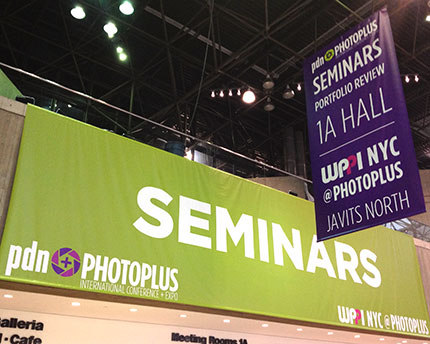
PhotoPlus Re-cap: Seminars & Tech


PhotoPlus Expo was enlightening this year, for a number of reasons. Among them, a big hit at the show when it comes to continuous-light sources, but more on that in a minute. American Photographic Artists (Yes, that's the new name for what used to be referred to as Advertising Photographers of America, or APA) brought myself and Michael Grecco in for a rousing discussion about the value in licensing, and how to generate revenue over the life of your image's viable (and valuable) time. PDNPulse did a very nice write-up on it here -
PhotoPlus Panel: Why Licensing Matters (10/31/11) so I won't recap their piece except to encourage you to read the review and learn a few of the tidbits that you missed if you weren't in attendance.) PhotoPlus Panel: Why Licensing Matters, summarizing the presentation by saying "making extra money on photographs you’ve already taken, that’s just a smarter way to do business."

On the technology side, several companies caught our attention.
(Continued after the Jump)

First up, is the company ikan, which has an amazing array of CLS lighting. Just when you thought you had every strobe you needed, all of a sudden you're now "shooting just a little bit of video" for that still client (or branching into multimedia all-together) and realize that strobes just don't do it for your video needs. Enter CLS, and ikan, with amazingly reasonable prices on their lighting products with blindingly bright LED units that are small and mount on camera, to 1' x 1' units that seem like they could burn out your retinas. Sure, they also sell camera cradles, bags, and countless other production tools (all with a craftsman's approach to quality), but the lighting, that's worth a long look, because you'll never have to suffer under "hot lights" again if you go this route, not to mention these LED's are battery-powered and highly efficient, so that means no blown circuits with a few hot lights plugged in! Our go-to source for these units is Mac Business Solutions, which is a top-end boutique for all things mac (from computers to still gear to video, to, yes, even high end printers). Be sure to ask for Sonny, the owner, when you call.

Next was GoalZero which has some amazing portable battery power. We picked up a set of these packs, and have used them to power dying laptops, and hope to use them to power our ikan lights when they arrive! Not only can they provide a wide range of power, but they also have portable, small, and efficient solar panels to recharge your kit. No more looking for a shack with a bunch of car batteries when you're in the middle of nowhere to charge your gear. These babies do the trick.

Our last tech company that peaked our interest that we're featuring (trust us, there were many), is onOne Software. They launched Perfect Suite 6 on October 25, right before the show, and Brian Kraft, VP of Sales talked about how advanced this new version is, and we're a believer. The resizing, focal point features, and the portrait retouching capabilities make this thing a dream for those looking to save time. Further, there are plug-ins for both Lightroom and Aperture, so check the specs to see how these can integrate into working where you do, or, if you prefer, as a standalone application (or module of all of them combined.)


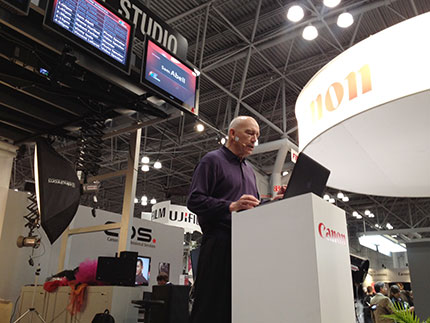
A worthwhile presentation was the always enlightening Sam Abell, who spoke at the Canon booth. If you missed (or didn't want to pay for the 3 hour seminar (which you should have if you'd have had the option), Sam Spoke for a brief period of time at the Canon stage, and if you couldn't make it to NYC, Canon was saavy enough to live-stream it. Suffice to say, I'm biased when it comes to Sam, but his stories are always so engaging and inspiring. Rumor has it he's in the Amazon working on a book project, so stay tuned.

All in all, I was impressed with the integration of the WPPI portion of the show, following the merger (or aquisition?) of WPPI by Neilsen/PDN, which was announced at the 2010 show. Well done, integrators. The show was, as always, not to be missed. If you did, don't miss it next year.


Please post your comments by clicking the link below. If you've got questions, please pose them in our Photo Business Forum Flickr Group Discussion Threads.

Monday, October 10, 2011

Contract Analysis: Gannett/US Presswire

Photo Business News has written extensively about the acquisition of US Presswire by Gannett. Recently, Photo Business News was provided this contract that outlines the proposed new contract between US Presswire and their contract photographers. Below is a review and analysis of the contract, as someone who is very familiar with contract language for photographers. As the laws in every state are different, and more importantly, as I am not a lawyer, the analysis and commentary below should not be construed as legal advice, and you should seek competent legal counsel should you need such to consider this contract before signing it.

(Commentary and analysis after the Jump)


This Active Photographer Agreement (“Agreement”) is made effective as of September 1, 2011, by and between US PRESSWIRE, LLC, having offices at 1230 Peachtree Street NE, Suite 1900, Atlanta, Georgia 30309 (on behalf of itself and its affiliates, “Agency”), and {Photographer Name}, a photographer having an address of "{photographer’s address} (“Photographer”).

COMMENTARY & ANALYSIS: This is a standard clause, which sets forth who is actually entering into the contract.
W I T N E S S E T H:

WHEREAS, Agency is in the business of creating, distributing, delivering and licensing the use of photographic images and video images or footage, primarily through its website, www.uspresswire.com, and through various other internet or electronic means;

COMMENTARY & ANALYSIS: While this is a common term, there are several points worth addressing in this clause. The first is that this is not a typical “agency” relationship. They are not “representing” you as much as they are themselves. They are using “Agency” because it has entered into the common parlance as they, and Getty have. However, they are not looking out for your own interests first and benefiting at a percentage, they are looking out for themselves first, with your images (and video) as the value, and you get a percentage. That brings up the next point – they are allowing for the distribution of your video as well, which is new. I would suspect that an organization that is now in the business of licensing video will raise a few eyebrows with the TV rights-holders. Further, they say “through various other internet or electronic means”, which likely refers to a Gannett branded service, or their own proprietary network not accessible to the general public.
WHEREAS, Photographer is in the business of creating photographic images and/or video images or footage; and

COMMENTARY & ANALYSIS: Actually, We are in the business of licensing, not creating. We create in order to license. That said, while this too is a standard clause, again, it includes video. It will only take a few photographers to post video clips from the sidelines of a major league sporting event before the networks take issue. Further, this contract now will preclude you from doing anything with video outside of this contract that might compete with USPW.
WHEREAS, Photographer desires to engage Agency to represent Photographer with respect to certain photographic images owned by Photographer, and Photographer desires to photograph certain events for Agency, all in accordance with the terms and conditions set forth in this Agreement.

COMMENTARY & ANALYSIS: “represent Photographer” here seems to be a perversion of the concept. The Agency is the sole arbiter, and you (and your images) are along for the ride.
NOW, THEREFORE, in consideration of the foregoing premises and agreements contained herein, and other good and valuable consideration, the receipt and sufficiency of which is hereby acknowledged, the parties hereto hereby agree as follows:

COMMENTARY & ANALYSIS: This clause, while standard, essentially causes you to acknowledge that the rates that USPW/Gannett are paying are “good and valuable”, and they meet a “sufficiency” test, neither of which are, in reality and fairness, true. However, this clause will preclude you down the line from bringing a suit with much likeliness of success, with the claim of unreasonable compensation.
1) Grant of Authority. Photographer hereby grants to Agency the exclusive worldwide right to use, copy, perform, display, market, distribute, license, sub-license and negotiate the production rights of all photographic images, digital files, video images or footage and all other photographic materials that are delivered to Agency by Photographer (including Stock Images (as defined below), collectively the “Images”), in any and all media, now known or hereafter developed, whether such Images are created by Photographer while working under credentials issued from or through Agency or otherwise. Notwithstanding the foregoing, Photographer shall retain the copyright to the Images and Photographer shall have a limited right to license the Images to Photographer’s own editorial clients provided that:

COMMENTARY & ANALYSIS: In this clause there seems to be a problem, because you are granting “the exclusive worldwide right”, which means that everything they get from you can’t be used anywhere else in the world, except for where they permit you to do so. Further, this clause forces you to accept whatever fees they deem appropriate, from free, to, frankly, a situation where you pay to have your work placed somewhere. In other words, if they deem that it’s worthwhile to USPW to pay $100 to have your photo used somewhere, then they could legitimately debit your account that amount, and you would have no recourse. Further, this clause encumbers all of your “stock images” too under this same agreement. They acknowledge the obvious, telling you that you retain copyright, however, they then begin to set forth a very narrow window that you can service only “editorial” clients. So, if you are on the sidelines, and decide to make an image of the goal line marker because it could be used as a nice stock image for advertisers, despite the fact that there are no NFL markers or other branding on it, you can’t do anything with it. A photo of a fan that gets your card and wants to order a print from you? Nope – that’s not editorial, so you can’t do that either.
a. such editorial clients do not compete with the Agency or its customers;

COMMENTARY & ANALYSIS: There are essentially no editorial clients that don’t compete with USPW/Gannett, because both are in the business of licensing stock images, so this essentially kills all editorial clients
b. the Images do not violate the issuer’s credential language or policies or infringe upon the intellectual property rights of any third party;

COMMENTARY & ANALYSIS: This is a reasonable clause, but since your credential was issued to USPW/Gannett, any use by you likely would violate credential language.
c. the Images shall not be distributed on any website, including but not limited to competitors, agencies, photoshelter (where any image can be made for sale) or any other photo service website worldwide;

COMMENTARY & ANALYSIS: With almost all images being displayed on websites, this makes your use of the internet unacceptable to USPV. It’s interesting that they particularly single out Photoshelter. Of specific curiosity is the fact that the business “Photoshelter” (with a capital “P”) is identified as “photoshelter” (with a lower case “p”) and that is either a typographical error, or there was an intention to do so for legal reasons.
d. Photographer has secured all intellectual property rights and clearances to the Images; and

COMMENTARY & ANALYSIS: This is a necessary clause to protect USPW, however, it is fraught with hurdles that make it all but never likely you’ll get past them.
e. Photographer notifies Agency in writing of any intent to license the Images to Photographer’s own editorial clients.

COMMENTARY & ANALYSIS: This is untenable on it’s face that they are asking for this. This means you’ll notify them of EVERY potential licensing opportunity, which makes it easy for them to object to every sale, and then contact them with the same image and sell it themselves, take their cut, and then give you the fraction you are owed.
2) Images Created Under Agency Credentials. Photographer hereby covenants, acknowledges and agrees that with respect to all Images that are created by Photographer while working under credentials issued from or through Agency and while on assignment for Agency, including Images that are taken but not delivered to Agency by Photographer (“Outtakes”):

COMMENTARY & ANALYSIS: This clause closes a loophole that Photo Business News pointed out when analyzing the last USPW contract, whereby even outtakes are encumbered by USPW. In the past contract, anything not delivered to USPW wasn’t governed by the contract.
a. Photographer shall be prohibited from using such Images and Outtakes for any non-editorial and/or commercial purpose, exhibition, reproduction, display, performance, adaptation or publication of any kind (including, without limitation, advertising, sales, marketing, merchandising or resale purposes);

COMMENTARY & ANALYSIS: This means, among other things, that you can’t have a gallery showing, sell your work as art, and, really, as written, it’s confusing if you can even do an editorial sale at all. This clause essentially prohibits you from doing anything with your images not approved by USPW/Gannett.
b. Photographer shall be prohibited from selling or licensing such Images and Outtakes on any website; provided, however, Photographer may use such Images and Outtakes in accordance with the issuer's credential language or policies for self-promotion on Photographer’s personal website;

COMMENTARY & ANALYSIS: This reinforces you can’t do anything with the images, except self-promotion on a personal website. This differentiates from a “professional website”, which would be for your business, which might compete with theirs, and as such, wouldn’t be allowed.
c. Photographer shall not place any such Images and Outtakes on any social media network including, but not limited to Facebook, My Space, Twitter, Linked-In, etc.; provided, however, Photographer is permitted to post a link to the Images and Outtakes to the US PRESSWIRE.com website and/or Photographer’s personal website or blog and will be permitted to place the Images and Outtakes on Sportsshooter.com; provided further that Agency credit accompanies Photographer’s name; and

COMMENTARY & ANALYSIS: This clause will be a problem for many of the hobbyists who shoot for USPW for bragging rights amongst their friends. Again, it’s interesting to see that they’ve identified SportsShooter.com as a venue they want to place some restrictions on.
d. Photographer shall ensure all such Images and Outtakes shall be co-credited to Photographer and Agency when placed in any and all self-promotion campaign including, websites, blogs, print, brochures, galleries, photo contests, etc.

COMMENTARY & ANALYSIS: This clause really makes clear that they’re not your “agent”, and that whatever marketing or promotion you do for yourself (obviously at your expense) is also marketing for USPW/Gannett.
3) Representations of Photographer. Photographer hereby represents, warrants, covenants, acknowledges and agrees that:

a. Photographer is and shall at all times be the sole and exclusive owner of the Images, or if Photographer is not the owner of any Images, Photographer has the right to provide such Images to Agency, and Photographer will acquire the copyright owner's permission for Agency to use the Images;

COMMENTARY & ANALYSIS: While this is standard, it could create some problems. If you set up a remote, for example, and have an assistant trigger the camera, that’s could be a problem depending upon your contractual arrangement with the assistant. Further, as Photographer is warranting they are the sole and exclusive owner, and further, that this contract is an exclusive contract, whomever photographer gets the copyright owner’s permission from also is covered by all the restrictions of this contract.
b. The Images are original;

COMMENTARY & ANALYSIS: This is a normal clause.
c. The Images do not and will not infringe upon any copyright, trademark, right of privacy, right of publicity, proprietary right, intellectual property right or any other right of any third party anywhere in the world;

COMMENTARY & ANALYSIS: This is a wholly unworkable clause, as the infringing they are detailing often takes place in the final use of the photo. So, a photograph taken of an athlete wearing an NFL Jersey and a Nike swoosh could be used editorially and fit into this clause, however, if the image was used commercially, it could be a violation of this clause, and the photographer could be at fault for not securing those rights. Further, anyone in a photo could sue for any reason. Photographer's liability should be limited to providing model releases, and where they are absent, the agency takes the sole risk, and the photographer does not warrant anything.
d. Agency reserves the right, in its sole and absolute discretion, to refuse to accept any Images;

COMMENTARY & ANALYSIS: This is, to a certain degree fair, however, if you have a body of work you wanted to submit, and an editor objected, you couldn’t submit it, and further, if you covered a game/event, and USPW/Gannett didn’t take the images, you couldn’t submit them to anyone else.
e. Photographer has the right to enter in this Agreement with Agency and to perform the obligations set forth herein;

COMMENTARY & ANALYSIS: Standard clause which sets forth that you aren’t encumbered by a contract with someone else
f. Photographer has the exclusive right, power and authority to make the grant of rights to Agency in this Agreement;

COMMENTARY & ANALYSIS: Standard clause which sets forth that you aren’t encumbered by a contract with someone else
g. Photographer shall obtain any and all releases necessary to allow Agency to license the Images;

COMMENTARY & ANALYSIS: This is a potentially huge problem – you’ll be required to get model releases – and as such compensate the persons you get releases from. This is because you are granting agency the right to license commercially, exclusively, and the way this clause is written it could be you that would be liable if an image of an athlete was licensed by USPW/Gannett for commercial purposes – the would merely point out that you were required to get the releases, and did not. If it said “….for any non-editorial uses…” but even still, you’re now the one required to chase down every recognizable subject, and every trademark holder, as this clause is written.
h. Images created by Photographer while working under credentials issued from or through Agency shall not be used by Photographer for any commercial purposes whatsoever anywhere in the world;

COMMENTARY & ANALYSIS: As such, even if a player saw an image you took and wanted to use the image on his sports drink line, you couldn’t do it. It is understandable that most credentials preclude commercial use, however, it could be argued that an Agency license is a commercial use, and it could also be argued that having a photo on a blog alongside ads is a commercial use.
i. While on assignment and working under credentials issued to Photographer by or through Agency, Photographer will conduct themselves in a professional manner at all times in accordance with the highest industry standards and code of ethics, within the rules set forth at any venue, league, team, sport, or any person or organization having authority and Photographer shall not violate the terms of the issuer's credential language or policies;

COMMENTARY & ANALYSIS: While it would seem obvious to some, this clause is important so that it is clear that photographers don’t, for example, decide it’s appropriate to clap/cheer and/or participate in the jubilation. The contents of this clause should go without saying, yet it’s being stipulated.
j. Photographer shall use all reasonable means to become familiar with the rules set forth by any organization, governing body, venue, sport, team, league, security personnel, etc., while on location working an event or assignment;

COMMENTARY & ANALYSIS: Reasonable given that there is a continually revolving door of photographers that are new to the profession and likely unaware of the rules and nuances of covering important sports events. This clause allows for USPW/Gannett to, for example, discontinue their relationship with a photographer that forgets (or never new) that they can’t click a shutter when a pro golfer is about to (or is in mid-) swing.
k. When Photographer accepts an event or assignment from Agency, Photographer shall photograph the event or assignment and transmit the Images either during or immediately after the event or assignment as specified by Agency in accordance with the policies in the stylebook guidelines or specified by Agency editors, managers or personnel. Images shall be fully captioned with Photographer's name in the caption field as set forth in Agency's guidelines for captioning and transmitting in the Agency stylebook;

COMMENTARY & ANALYSIS: This would be standard for any professional accepting an assignment. New photographers may not understand the timely nature of the news business, and may not recognize the importance of delivering images in a timely manner.
l. Photographer shall not cancel any accepted event or assignment within 72 hours (3 days) before the start time of the event or assignment provided such cancellation is not a medical, family, or other unforeseen emergency acceptable to Agency;

COMMENTARY & ANALYSIS: Interesting that the Agency deems itself the sole arbiter of the nature of an emergency, and not the person with the emergency.
m. Because Agency is a news organization, Photographer shall not crop, modify, alter or manipulate the Images in a manner that alters the fundamental nature of the Images;

COMMENTARY & ANALYSIS: Sadly, this clause is necessary as there may be some photographers who did not formally study photography and may not realize the ethical considerations that go into delivering images that are not manipulated into something that didn’t happen, or is re-created because the moment was missed.
n. Photographer shall use Photographer’s best efforts to promote Agency's name and good reputation throughout the world at all times, and Photographer shall not make any disparaging remarks about Agency or its affiliates; and

COMMENTARY & ANALYSIS: This means that when USPW/Gannett is late to pay, or a USPW photographer gets criticized at a sporting event, you’ll defend USPW/Gannett. Further, if someone criticizes USPW/Gannett in an online forum – even if it’s a justified criticism, you not only can’t say “I see your point”, you must use your “best efforts” to promote USPW/Gannett, which means posting a positive comment.
o. Photographer shall use its best efforts to submit a second edit of Images while working under a credential and on assignment by Agency (“Stock Images”) within ten (10) days following the event or assignment in accordance with the policy guidelines set forth in the Agency stylebook.

COMMENTARY & ANALYSIS: This means that not only are you doing the $100 assignment for 4-6 hours, and spending 2-4 hours doing your first edit, but you also are doing another 4 or so hours on a second edit – not to earn you much more money, but rather, to expand the library of images.
4) Indemnification. Photographer hereby agrees to indemnify, defend and hold Agency, its affiliates, successors and assigns, and their respective officers, directors, employees, representatives and agents, harmless from and against any and all claims, demands, actions, causes of action, settlements, damages and expenses (including reasonable attorney's fees and court costs) arising directly or indirectly from: (i) the breach or alleged breach by Photographer of any representations, warranties, covenants or agreements made by Photographer hereunder; (ii) any erroneous or inaccurate information supplied to Agency regarding the Images; and (iii) personal injury (including death) or property damage caused by Photographer while working under credentials issued from or through Agency and while on assignment for Agency.

COMMENTARY & ANALYSIS: This is indemnification without parity. You are not indemnified if Agency does something wrong. However, if you mis-credit an image, have a football player crash into your 400mm 2.8 and crush it, or the Agency gets sued for your actions, you’re on the hook for everything. Further, clause "(i)" may be okay provided that the other terms that require photographer to warrant that no 3rd party rights have been violated, be revised.
5) Use of Images. Agency and its affiliates, successors and assigns shall have the right, in their sole and absolute discretion, to: (i) determine how the Images will be marketed, displayed and distributed to Agency's customers; (ii) edit, crop or modify the Images, including the captions and metadata that accompanies the Images; (iii) establish the terms and conditions, including the fees, for the license of the Images to Agency's customers; and (iv) perform its services without Photographer's further approval. Photographer agrees that any Image or Stock Image given to Agency for distribution shall remain available for distribution by Agency for a minimum of five (5) years from the date of receipt by Agency.

COMMENTARY & ANALYSIS: This is where USPW/Gannett licenses all the photos under a subscription where you earn nothing, or next to nothing. You have no say whatsoever in anything having to do with your image and how it gets used.
6) Compensation.

a. Assignment Fees

i. Agency will pay to Photographer an assignment fee in the amount of One Hundred Dollars ($100.00) per day per assignment for the remainder of the 2011 calendar year. Commencing January 1, 2012, Agency will pay to Photographer an assignment fee in the amount of One Hundred Twenty-Five Dollars ($125.00) per day per assignment. Photographer shall receive an Agency code for each event or assignment. Assignment fees will be paid by Agency on a monthly basis based on such Agency codes. The assignment fees include basic expenses for local area assignments. For clarity, Agency will pay to Photographer one (1) assignment fee for any assignments that have multiple events in the same day, such as a baseball double header or basketball tournament.

COMMENTARY & ANALYSIS: This is basically an allotment of $100 to cover your parking and mileage as well as a meal, as all of this is a part of the $100. Further, unlike most other organizations, if there is more than one sporting event you get paid extra, USPW/Gannett will not. This seems unreasonable on it’s face, but I am sure that there will always be someone who will say yes, no matter how bad the deal is.


ii. Photographer acknowledges and agrees that the assignment fees shall be paid to Photographer in lieu of any compensation for the use of Images or Stock Images by Agency’s editorial subscription based customers worldwide where applicable and in the Agency’s sole discretion. This does not include licensing proceeds for any commercial use or editorial a la carte sales.

COMMENTARY & ANALYSIS: This means, as it is written, that anything you have had in the USPW archives may well not generate income for you, as this “new deal” where they pay you for assignments, covers whatever you might have earned off stock licensing. Of course, for the rare commercial or a la carte sale, you still generate revenue, however those are few and far between, at best.
iii. In the event any additional expenses are required, reimbursement must be pre-approved in writing by assigning editor and agreed to in advance by the Photographer. The pre-approved expenses must be submitted on an Agency expense reimbursement form and submitted to the assigning editor for review and approval within 30 days after they are incurred.

COMMENTARY & ANALYSIS: This is a reasonable clause to have in.
b. Editorial and Commercial Licensing Fees.

i. Agency shall retain a commission from the fees collected from the licensing of any editorial or commercial a la carte Images and Stock Images, in accordance with the Commissions Schedule set forth on Exhibit A attached hereto and incorporated herein by reference. Agency shall deliver to Photographer the net balance of the fees collected from the Images and Stock Images in accordance with Exhibit A, along with a report listing the origin, description, and amount of sales. Agency will deliver all reports and make all payments to Photographer on a quarterly basis, during the month following the quarter and only after Agency receives the fees from its customers for the Images and Stock Images.

COMMENTARY & ANALYSIS: Aside from the ridiculous notion that a “commission” is a figure is in excess of 50%, this concept is reasonable. The challenge will be how they define “net balance”, because they can attribute all manner of expense to the marketing of an image.
ii. Photographer's share of any fees collected from the Images or Stock Images will not be paid until Photographer’s account equals at least One Hundred dollars ($100.00); provided, however, if there is a lesser amount in the Photographer account and Photographer makes a written request to have the lesser amount paid, Agency will pay the amount currently due Photographer. In the event that no fees have been collected from the Images or Stock Images, Agency will not deliver a report or make a payment to Photographer. In the event that Photographer is no longer submitting Images or Stock Images to Agency on a regular basis, or the Agreement is terminated for any reason, Agency will pay Photographer's share of any fees collected from the Images on an annual basis, commencing on the first anniversary of the last date that Photographer submitted any Images to Agency.

COMMENTARY & ANALYSIS: This is a reasonable clause.
iii. A la carte fees licensing fees and quarterly reports of Images or Stock Images shall be paid in addition to the assignment fees set forth above.

COMMENTARY & ANALYSIS: This is a reasonable clause.
7) Unauthorized Use of Images. In case of damage, destruction, loss or unauthorized use of any Images by any customer who lawfully obtained Images from Agency, Photographer hereby grants Agency full and complete authority to make claims or to institute proceedings in Photographer's name to prosecute such unauthorized use. In no event, however, shall Agency be liable for such unauthorized use nor shall Agency be required to take any action to prosecute such unauthorized use. Any recoveries shall be divided between Photographer and Agency 50/50, after deduction for the costs of any such actions incurred by Agency, including, without limitation, legal fees or other expenses. All settlements shall be made in Agency's sole and absolute discretion. If Agency chooses not to pursue any legal action, Photographer reserves the right to do so after notification from Agency.

COMMENTARY & ANALYSIS: So, if a publication infringes your copyright, you are not allowed to sue – only the Agency – if they decide to, at their sole discretion. However, if they do, and win, they get half . So, all the legal fees get paid (or attributed by in house counsel at out-of-house rates) and then whatever is left over, you have to split with Agency. Only after Agency opts not to pursue a matter, can you – if you notify them. That said, you would still be required to split whatever you won, as this clause is written. What would be fair instead would be that agency has the first option to sue, and as long as they don't exercise that option within X months of the notification, you then have the right to sue and keep 100%.
8) Term. This Agreement shall commence as of the date first set forth herein above and shall continue for an initial term of five (5) years, unless sooner terminated by Agency, or otherwise terminated as provided herein. Upon the expiration of the initial term, this Agreement shall automatically renew for a term of five (5) years, unless written notification is given by either party to the other at least sixty (60) days prior to the termination date. Agency may terminate this Agreement at any time, with or without cause and for any reason or for no reason at all, upon ten (10) days prior written notice to Photographer. Agency will pay Photographer's share of any fees collected from the Images or Stock Images after the termination date on an annual basis, commencing on the first anniversary of the termination date.

COMMENTARY & ANALYSIS: This is a lengthy term, and it should be a year, at most two.
9) Return of Original Images. Upon the expiration or termination of this Agreement, if requested by Photographer in writing, and provided the Images have been in Agency's custody for at least five (5) years, the original Images and Stock Images will be returned by Agency to Photographer, and digital formats will be removed from Agency's database within one (1) year from the date of the written request. If Photographer requests faster retrieval, Photographer agrees to pay Agency its cost of labor necessary to perform the removal, retrieval and return of analog Images or Stock Images. Agency is not obligated to return any digital formats to the photographer. Notwithstanding the foregoing or anything to the contrary herein, nothing in this Agreement will require any of Agency’s third-party customers that license use of the Images from Agency to remove the Images, at any time, from any archived editions of the media properties through which such customers had the right to distribute the Images pursuant to a valid license from Agency.

COMMENTARY & ANALYSIS: The notion that you could produce 4 years of images and then have your relationship end, and then the Agency not be liable for the return of your Original Images is unreasonable, at best.
10) Confidentiality. The contents of this Agreement are confidential in nature and shall not to be shared, copied, distributed, discussed, either whole or in part to any third party by Photographer during the term of this Agreement or after the expiration or termination hereof. At any time any other information, proprietary technology or any company business or operational information, including but not limited to discussions with Agency management or personnel is made available to Photographer, be treated as “Confidential Information” and shall not be shared with or to any third party anywhere in the world. Furthermore it is acknowledged by the parties that any violation of this provision will do irreparable harm to Agency and its affiliates.

COMMENTARY & ANALYSIS: This type of clause has often been struck down by courts. Further, when you get some “amendment” document, the original contract, and the amendment, become confidential. As such, it will be no problem for USPW/Gannett to say “oh, we’ve made changes to the contract for the better…” and they can’t comment on it to anyone (publically or privately).
11) Miscellaneous.

a. Independent Contractor. This Agreement is not an employment agreement between Agency and Photographer. Photographer is acting as an independent contractor. This Agreement does not constitute a joint venture or partnership. Neither Photographer nor Agency shall hold themselves out to any third party contrary to this understanding. Photographer possesses Photographer’s own medical, life and liability insurance at all times or agrees to be self-insured.

COMMENTARY & ANALYSIS: This is a standard contract term, however the addition of the sentence about agreeing to be self-insured if you don’t have coverage is interesting.


b. Arbitration; Governing Law. Any dispute arising under this Agreement shall be determined and settled by arbitration in the Commonwealth of Virginia, pursuant to the rules of the American Arbitration Association. Any award rendered will be final and conclusive upon the parties hereto and judgment thereon may be entered in any court having jurisdiction over the parties and subject matter. This Agreement shall be governed by, and construed and interpreted in accordance with, the substantive laws of the State of New York, without regard to the conflicts of law principles thereof.

COMMENTARY & ANALYSIS: Submitting – and being required to submit – to arbitration – is a bad deal in most instances.
c. Notices. Any notice relating to this Agreement shall be in writing and delivered in person, by registered or certified mail or overnight courier. Notices shall be addressed to the parties at the addresses set forth in this Agreement. Either party may designate a new address by notice to that effect given to the other party. Notices shall be deemed given (i) if by registered or certified mail, three days after mailing, (ii) if by overnight courier, the day after delivery by such courier service to the proper address and (iii) if delivered in person, the day of delivery.

COMMENTARY & ANALYSIS: Standard clause.
d. Successors and Assigns. Photographer may not assign or otherwise transfer this Agreement without Agency’s prior written approval. Agency may freely assign or transfer this Agreement. Subject to the foregoing, this Agreement shall be binding upon Agency and Photographer and their respective heirs, executives, administrators, representatives, successors and permitted assigns.

COMMENTARY & ANALYSIS: Standard clause.
e. Entire Agreement. This Agreement constitutes the entire understanding between Agency and Photographer and supersedes any prior understandings or agreements, oral or written, including, without limitation any existing photographer agreement between Agency and Photographer (“Existing Agreement”), which such Existing Agreement is hereby terminated. Notwithstanding the foregoing, any Images delivered by Photographer to Agency under the Existing Agreement prior to the date hereof shall become subject to the terms and conditions of this Agreement; provided however:

COMMENTARY & ANALYSIS: While the top of this clause is standard, the clause also folds in all previous images into the subscriptions and pay models.
i. Prior Use. Photographer shall be compensated for any such Images licensed by Agency prior to the date hereof in accordance with the Commissions Schedule attached to the Existing Agreement; and

COMMENTARY & ANALYSIS: This should be expected.
ii. Future Use. Photographer shall be compensated for any such Images licensed by Agency on and after the date hereof in accordance with the Commissions Schedule attached to this Agreement.

COMMENTARY & ANALYSIS: This is a problem if you had a contract you were happy with before, as now it’s governed by this one.
f. Exhibits and Schedules. Each Exhibit and schedule referred to herein is incorporated into this Agreement by such reference. Agency reserves the right to change, adjust or modify such Exhibits and schedules with the prior written consent of Photographer, which shall not be unreasonably withheld or delayed.

COMMENTARY & ANALYSIS: Standard clause.
g. Severability. If any provision of this Agreement is held illegal, invalid or unenforceable such illegal, invalid or unenforceable provision will not affect any other provision hereof. This Agreement shall, in such circumstances be deemed modified to the extent necessary to render enforceable the provisions hereof.

COMMENTARY & ANALYSIS: Standard clause.
h. Waiver. The failure of either party to insist upon strict performance of any of the terms or conditions of this Agreement will not constitute a waiver of any of its rights hereunder.

COMMENTARY & ANALYSIS: Standard clause. However, if say USPW/Gannett don’t insist on you doing, for example, a second edit, you can’t decide on your own on the next assignment to not do one.
i. Amendments. This Agreement may be amended only by a written instrument duly executed by Agency and Photographer.

COMMENTARY & ANALYSIS: Standard clause.
j. Counterparts; Facsimiles. This Agreement may be executed in any number of original or facsimile counterparts, each of which when executed and delivered shall be deemed to be an original and all of which counterparts taken together shall constitute but one and the same instrument.

COMMENTARY & ANALYSIS: Standard clause.
k. Survival. The provisions of this Agreement that by their nature or as specified hereunder are intended to continue beyond the expiration or termination of this Agreement, shall survive the expiration or termination hereof.

COMMENTARY & ANALYSIS: Standard clause.


(signatures)

---------------

EXHIBIT A

COMMISSIONS SCHEDULE
This Commissions Schedule is made an addendum to that certain Active Photographer Agreement (“Agreement”) by and between US PRESSWIRE, LLC (hereinafter referred to as “Agency” and {Photographer Name} (hereinafter referred to as “Photographer”.)

COMMENTARY & ANALYSIS: Standard clause.
WHEREAS, Pursuant to Section 6(b) of the Agreement, Agency has agreed to remit certain payments to Photographer for fees collected by Agency for the licensing of Images and Stock Images (as defined Agreement) on an a la carte basis, and Agency is entitled to retain a commission for the fees collected by Agency for the Images.

COMMENTARY & ANALYSIS: Standard clause modifying original agreement.
NOW, THEREFORE, the parties hereto hereby agree as follows:

1) Third Party Fees. Photographer agrees and understands that Agency has entered into certain agreements with third party agencies (hereinafter referred to as the “Third Parties”) pursuant to which such Third Parties have been granted the authority to distribute the Images and or Stock Images on their respective websites and via other electronic means. The Third Parties will remit commissions to Agency from sales made by the Third Parties of the Images (“Third Party Fees”), in accordance with such Third Party agreements. Thereafter, Agency will remit to Photographer fifty percent (50%) of the net Third Party Fees, and Agency will retain a commission of fifty percent (50%) of the net Third Party Fees. Agency will remit Photographer's portion of the Third Party Fees pursuant to Paragraph 6 of the Agreement.

COMMENTARY & ANALYSIS: This is horrible, because essentially, if USPW uses Gannett’s wire service to distribute a $50 photo, then USPW would only get 50%, and then you would only get 50%, or $12.50. Yet, Gannett would, through the revenues of it’s wire service and USPW, as two separate corporate entities under the one parent company, get 75%.
2) Agency Fees. Agency will remit to Photographer fifty percent (50%) of the net fees collected by Agency from editorial and commercial sales made by Agency of the Images and Stock Images (“Agency Fees”), and Agency will retain a commission of fifty percent (50%) of the net Agency Fees. Agency will remit Photographer's portion of Agency Fees pursuant to Paragraph 6 of the Agreement. Agency reserves the right to change, adjust or modify Agency Fees with the prior written consent of Photographer, which shall not be unreasonably withheld or delayed.

COMMENTARY & ANALYSIS: Standard clause.
3) Uncompensated Use. Photographer agrees and understands that Agency may, from time to time, allow Agency's customers to use certain Images and Stock Images without compensation. As a result, Photographer may not be compensated for the use and distribution of certain Images and Stock Images. This will be for, among other reasons, the purpose of revenue generating usage commitments or for promotional trials for the customer. Photographer agrees this action can be performed in Agency's sole and absolute discretion and without further compensation to or consent from Photographer.

COMMENTARY & ANALYSIS: This is a horrible deal where the photographer gets the short end of the stick while the Agency benefits. For example – a prospective client says they want their first month free, and your images are a part of that, and then on the second month, when the Agency got a check, none of your images were a part of that, and so you get nothing. Or, if some other USPW/Gannett photographer screws up, and in order to make it up to the client they say that the next assignment is a freebie, clearly they won’t use the one who screwed up, so you could end up getting the call, and there would be no compensation for the customer to use your images. Further, they have the right to use your images for barter arrangements, where they collect "in kind" compensation without collecting any money, and the photographer gets nothing. The examples of how this can be exploited to the photographer’s severe disadvantage are seemingly endless.


(Signatures)


Please post your comments by clicking the link below. If you've got questions, please pose them in our Photo Business Forum Flickr Group Discussion Threads.